
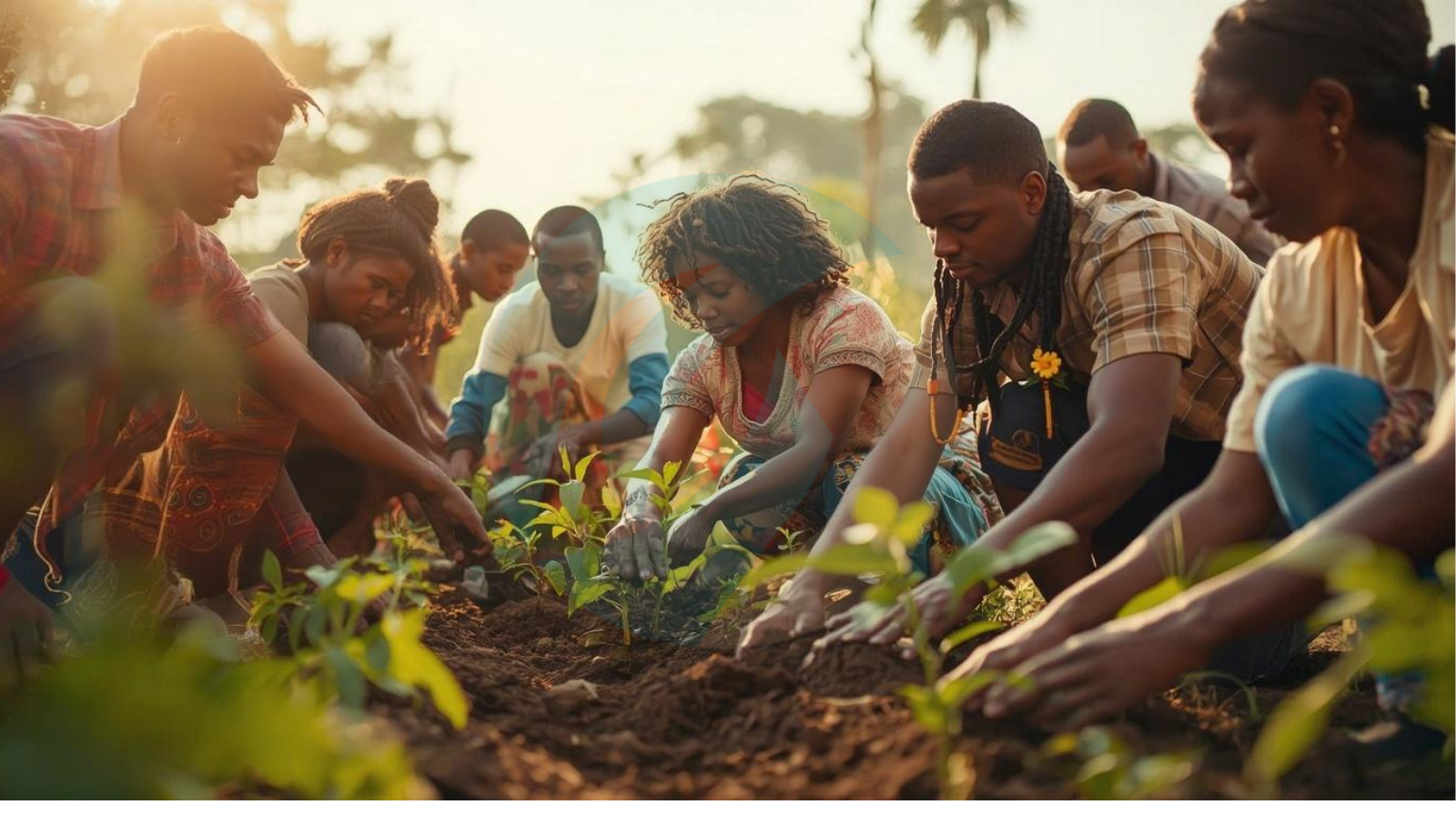
For decades, gender equality was treated mostly as a human rights priority or a social development pillar. But in 2025, this framing is no longer sufficient. Researchers, governments, and global institutions increasingly recognize gender equality as a strategic climate resilience mechanism, deeply linked to public policy effectiveness, environmental governance, and national stability. Reports from the IPCC, UN Women, UNDP, the World Bank, and the FAO consistently show that countries with high gender equality generate stronger climate outcomes, better disaster preparedness, and more sustainable natural resource management.
Climate impacts are escalating rapidly — more intense heatwaves, rising sea levels, prolonged droughts, and unprecedented floods — and they magnify existing structural inequalities. The World Bank and the IPCC confirm that vulnerable groups, particularly women and marginalized communities, face disproportionate climate impacts due to differences in access to land, finance, information, and mobility. This makes climate adaptation not just an environmental necessity, but a profound governance challenge. It demands systems that are inclusive, equitable, and responsive to the realities of all social groups.
In this context, gender equality becomes a core component of climate resilience, shaping how societies prepare for shocks, how institutions design policies, and how communities recover. This article explores why, supported by growing evidence from global climate and development sources.
1. Climate Impacts Are Not Gender-Neutral — And Policies Cannot Be Either
The IPCC’s Sixth Assessment Report highlights that climate change impacts are unevenly distributed across populations. Women often bear heavier burdens due to their roles in food production, water collection, caregiving, and informal labor — all sectors highly sensitive to climate variability. UN Women reports that women make up 70% of the world’s poor and are often more dependent on climate-sensitive natural resources, making climate shocks more severe for them.
Socio-economic realities amplify risks. The FAO notes that women represent a substantial share of smallholder farmers in Africa and Asia, meaning crop failures, soil degradation, and water scarcity disproportionately affect their livelihoods. Unequal access to climate information further widens the vulnerability gap. According to the UNFCCC Gender Action Plan, communication channels in many countries do not adequately reach or inform women, especially those without mobile phone access or literacy support.
These differences are not biological — they are structural. Policies that ignore them ultimately fail to protect entire segments of society. This is why UNDP’s climate adaptation guidelines insist on gender analysis as a prerequisite for national resilience strategies.
2. Gender Equality Strengthens Adaptation Systems — And Builds Climate-Ready Societies
Multiple studies show that gender equality enhances climate resilience by improving governance, strengthening natural resource management, and increasing household adaptability. The World Bank notes that countries with higher female political representation adopt more ambitious climate policies and environmental frameworks. OECD research confirms that gender-diverse leadership improves risk assessment, transparency, and long-term policy planning.
Women’s participation in natural resource governance is particularly impactful. The FAO reports that when women participate equally in water, forest, or land management institutions, resource sustainability improves and community compliance increases. Their knowledge — often rooted in local ecosystems and intergenerational practices — contributes to more context-appropriate adaptation strategies.
Households where women have decision-making power also demonstrate stronger resilience. According to UN Women’s climate-finance analyses, households with women controlling assets or income make more climate-resilient investments, diversify livelihoods, and sustain better food security during shocks.
Gender equality is not simply a moral goal — it is a performance enhancer for climate adaptation systems.
3. Gender-Responsive Policies Lead to More Effective Climate Action
Gender-responsive climate policies integrate gender considerations into governance, planning, budgeting, and monitoring. This is not theoretical. Countries highlighted in UNFCCC reports — including Rwanda, Nepal, Costa Rica, and Morocco — have shown that gender-sensitive national adaptation plans result in more equitable and effective outcomes.
These policies work because they reflect real social conditions. They help governments identify who is exposed, who has access to resources, and who is excluded from adaptation measures. UNDP’s work on National Adaptation Plans demonstrates that gender-responsive policies increase project uptake, improve transparency in climate finance allocation, and reduce implementation failures.
Case studies from the Green Climate Fund further show that climate investments embedding gender equality criteria achieve better long-term sustainability. This is because interventions are shaped around lived realities rather than generic assumptions. Governments can no longer design climate systems without understanding gender roles, mobility patterns, cultural norms, or economic constraints.
4. Climate Finance Is Increasingly Requiring Gender Integration
Climate finance institutions are embedding gender criteria into the heart of their funding processes. The Green Climate Fund requires gender assessments, gender action plans, and gender-disaggregated monitoring indicators for all proposals. The Global Environment Facility (GEF) mandates gender-responsive design and evaluation. The World Bank and AfDB now publish gender mainstreaming scorecards and require gender integration in climate investments.
This shift is grounded in evidence. GCF evaluations show that projects with strong gender components deliver higher long-term impact and greater community engagement. Climate finance institutions recognize that adaptation measures that exclude women are statistically less sustainable. This explains why gender is now tied to funding eligibility, risk assessments, and due diligence.
As climate finance becomes more competitive, governments that fail to integrate gender risk losing access to major funds. In contrast, those that invest in gender-disaggregated data, inclusive consultations, and women-led adaptation gain strategic advantage in resource mobilization.
5. Local Women Are Leading Adaptation — But Often Without Institutional Support
Across regions, women are already at the frontlines of adaptation. Reports from UN Women, the FAO, and the African Development Bank show that women farmers adopt climate-smart agriculture faster than men when given proper access to resources. Female entrepreneurs lead innovations in solar energy, clean cooking, sustainable farming, and circular economy initiatives. Women’s associations often manage forests, watersheds, and community early-warning systems.
Yet these contributions remain largely invisible in national policies. Limited land ownership, restricted access to credit, cultural barriers, and lack of technical training prevent women from scaling their initiatives. UNDP data reveals that only 15% of climate-related financial flows reach women-led organizations or women’s groups.
Recognizing and supporting women’s leadership is not only fair — it unlocks already existing adaptation solutions.
6. Urban Resilience Requires Gender-Sensitive Approaches
Urban climate impacts intersect with gender in unique ways. UN-Habitat and the World Resources Institute highlight that women are more vulnerable to urban heat stress due to caregiving roles that limit mobility or require staying indoors with poor ventilation. Public transport disruptions affect women more because of trip-chaining patterns linked to family responsibilities. Floods and infrastructure failures increase safety risks, especially in low-income neighborhoods.
Gender-responsive urban planning improves resilience by designing safer public spaces, inclusive transport systems, accessible early-warning communication, and better emergency responses. Cities like Barcelona, Kigali, and Bogotá have integrated gender in climate adaptation projects, with measurable improvements in safety, mobility, and public health during climate shocks.
Urban resilience cannot succeed without integrating gender-sensitive design principles.
7. A Gender-Responsive Transition Is a Just Transition
The global shift toward renewable energy and green economies creates opportunities — but also risks. The International Labour Organization warns that green transitions could reinforce existing inequalities if women lack access to training, financing, and green-job markets. Conversely, the Brookings Institution and UN Women highlight that economies with gender-inclusive energy sectors, green entrepreneurship ecosystems, and STEM education for women see faster innovation, higher productivity, and more equitable transitions.
A just transition must prioritize gender equality. When women participate in renewable energy, green agriculture, water governance, and climate-tech innovation, transitions become socially and economically stronger.
8. How Governments Can Integrate Gender Into Climate Resilience
Governments must move from commitment to integration. UNDP, UNFCCC, and GCF guidelines recommend embedding gender equality across climate planning systems, including national adaptation plans, disaster risk management frameworks, sectoral strategies, and budget processes. This includes gender-disaggregated climate data, gender-responsive budgeting, inclusive consultation processes, equitable representation in decision-making bodies, and targeted funding for women-led initiatives.
Countries that adopt these approaches are building stronger social contracts, more resilient economies, and more accountable governance models.
Conclusion: Gender Equality Is Climate Resilience
Climate adaptation is not only about infrastructure, technologies, or finance. It is about people — their roles, knowledge, vulnerabilities, and leadership. Studies from the IPCC, UNDP, UN Women, FAO, and multiple development banks show that gender equality is a resilience multiplier, an economic stabilizer, and a governance strengthener.
Countries that recognize this will build more resilient, equitable, and prosperous societies. Those that ignore it will face widening vulnerability gaps, weaker climate systems, and slower progress toward sustainable development.
Gender equality is not only a moral imperative — it is one of the most strategic, evidence-based investments in climate resilience available today.